

For DC, warehouse and operations managers

Unlock and improve your warehouse knowledge.

Securely and instantly, for every new starter and every shift. CanvasKB turns your putaway, picking, dock and safety SOPs, plus equipment documentation linked from your OEMs' websites, into guidance your team can use, and turns their questions into insights that show you what to fix before peak.

After the 30-day trial, Tier 1 is $125 a month for up to 25 people, about $5 a person.

Answers only from your approved documents Each person sees only their areas Never used to train AI
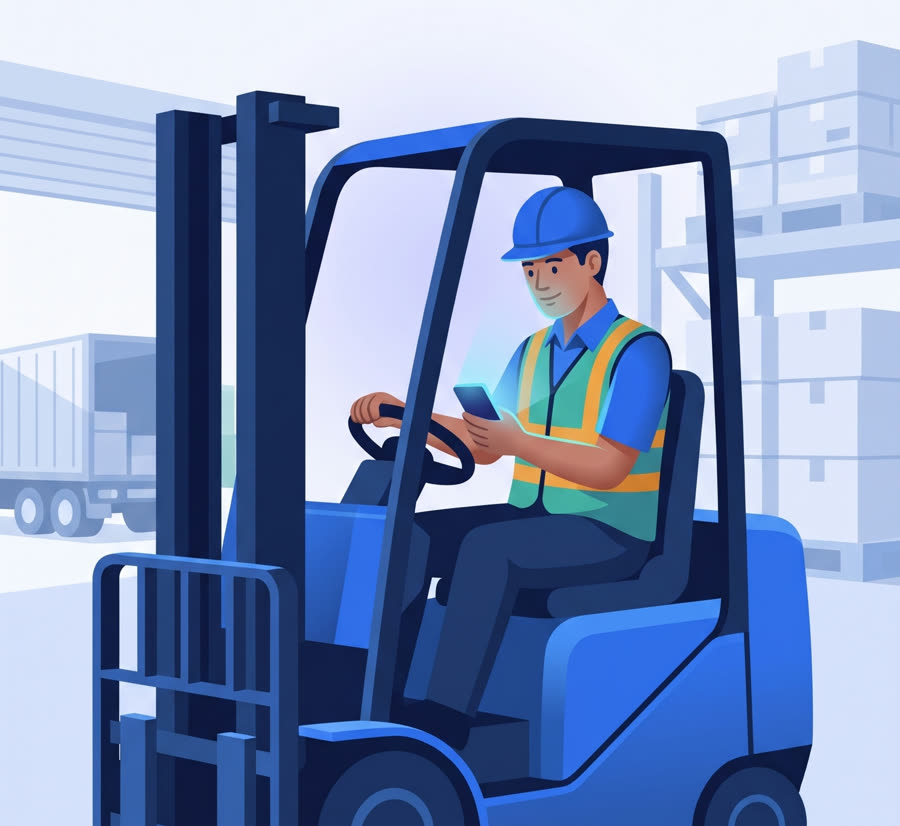
Illustration of a warehouse supervisor in a hard hat and hi-vis vest reading an answer on a phone between racks.
CanvasKB Example

Where do oversized pallets go in Zone C?

Use the floor locations, not the racking. WH-SOP-031, section 2.4: pallets over 60 inches high go to bulk lanes C-40 to C-48.1

1 WH-SOP-031 Putaway, Zone C Rev B LATEST

A peak-season morning, in questions

None of these questions are new. The answers are written down somewhere, but every repeat pulls a supervisor off the floor, and nobody who owns the SOPs sees the pattern.

Illustration of a worker searching for one document among towering shelves of binders and filing cabinets.
05:58 Temp, second day

“Where do oversized pallets go in Zone C?”

Asks the supervisor.

06:20 Reach-truck operator

“Do I need a current certification to run the reach truck on this shift?”

The certification policy is in the HR office.

06:47 Picker

“I found a crushed carton while picking. Now what?”

Guesses.

07:15 Temp, first day Asked before

“Where do oversized pallets go in Zone C?”

Same question. The supervisor answers it again.

Every question is a signal. CanvasKB makes sure you hear it.

Do you know what your new starters are asking?

Answering the question is half the job. CanvasKB also shows you what gets asked, which questions your SOPs can't answer, and where access gets in the way, so the next temp gets a better answer than the last one.

Review request Pending
Receiving area Sent anonymously

“This doesn't say what to do with a short-shipped pallet.”

AI briefing

Asked how to receive a short-shipped pallet. WH-SOP-012 doesn't say. Likely gap: a short-shipment step.

1

Anyone can flag a weak answer

Every answer has Send for review. Requests are anonymous and go to the people who look after that knowledge area, with an AI briefing on the likely gap.

Weak answers Last 30 days
18 Knowledge gaps
6 Access gaps
4 Flagged

Top areas missing content

Receiving
9
Returns
5
Zone C
2
2

Find the gaps in your SOPs

Analytics groups weak answers into knowledge gaps, access gaps and flagged answers, with the questions behind each and the areas that miss most. You see the questions, never who asked.

WH-SOP-012 Receiving v2, synced from SharePoint
Required reading Due Friday
15 of 20 confirmed Nudge 5 people
3

Fix it, and see who has read it

Update the file in SharePoint and the new version syncs in. Then assign it as required reading and see who has confirmed.

Screens recreated from the CanvasKB app, with example data.

What it costs when warehouse knowledge stays locked up

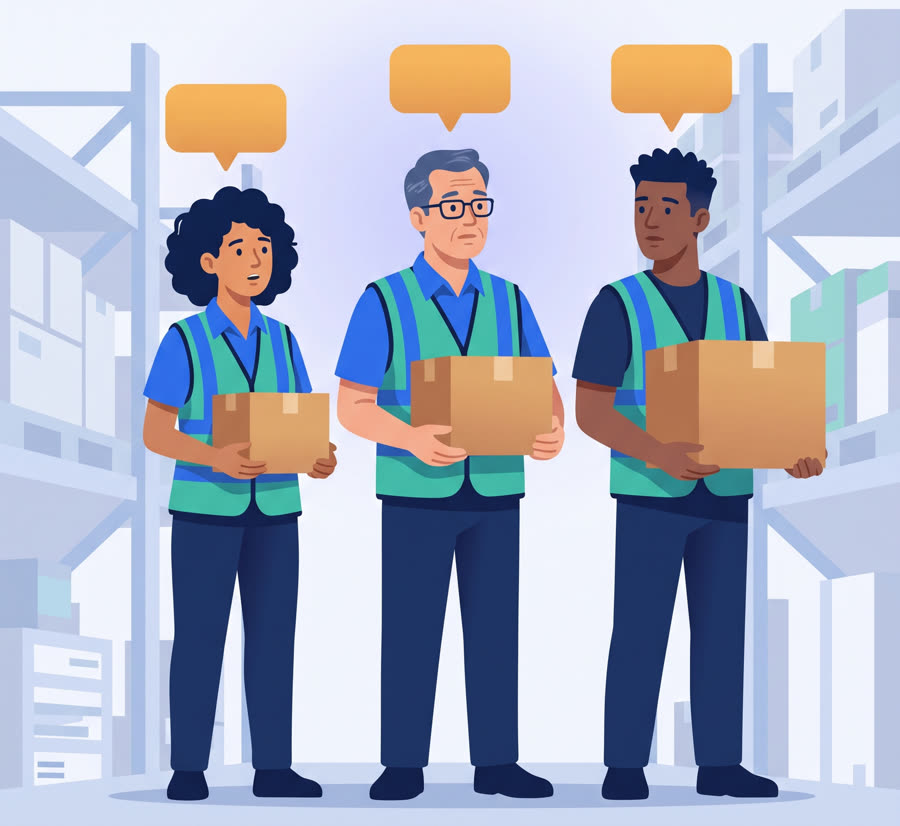
Illustration of three new temporary warehouse workers holding boxes and looking around unsure, with question bubbles above them.

New starters every week

Peak season brings people who have never seen your zones, and orientation can't cover every procedure in a shift or two. So they learn by asking, or by guessing.

28 to 36% is the typical yearly turnover in warehouse and logistics roles.

Source: Certified Source, 2026
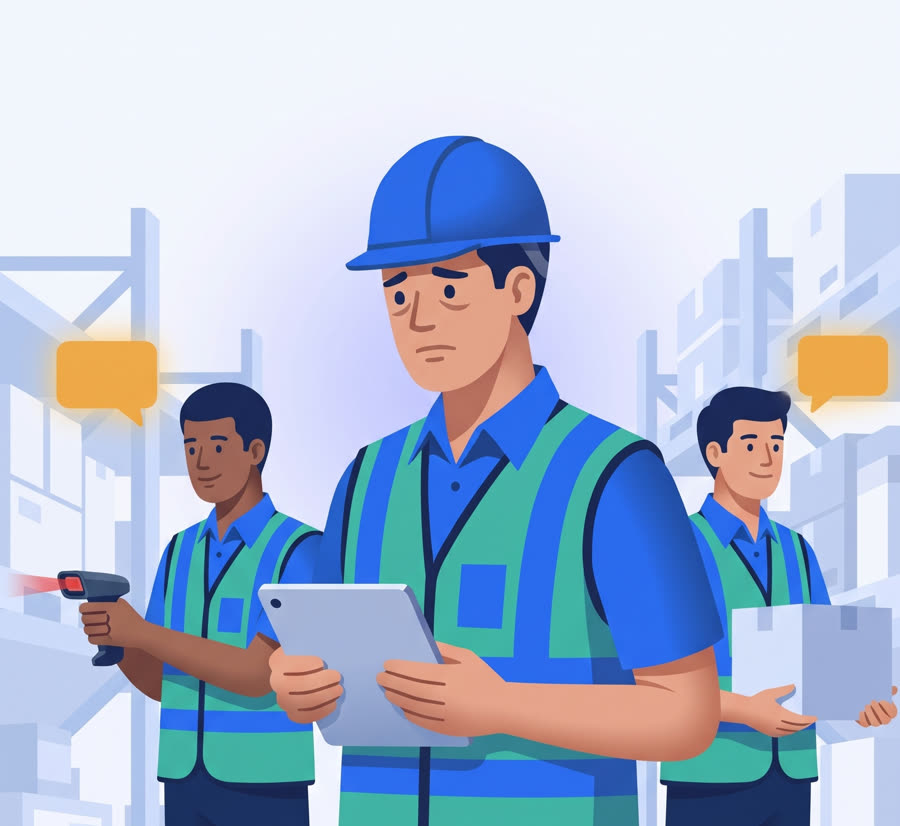
Illustration of a tired warehouse supervisor with a tablet while two workers wait beside him with questions.

Supervisors answer the same questions all shift

Every repeat question pulls a supervisor off the floor, usually in the hours when volume is highest. The answer exists. It's just quicker to ask.

12% of employees strongly agree their organization does a great job of onboarding new people.

Source: Gallup, 2019

Illustration of a reach-truck operator at a loading dock checking a phone.

Every building does it a little differently

Slotting rules, dock procedures and equipment rules vary from site to site. Someone who moves between buildings needs this building's answer, not the last one's.

Guidance for every new starter, in plain words

Ask the way you'd ask your shift lead. Every answer cites its source, and when your documents don't cover something, CanvasKB says so instead of guessing.

CanvasKB Example answer

Where do oversized pallets go in Zone C?

Use the floor locations, not the racking. WH-SOP-031, section 2.4: pallets over 60 inches high go to bulk lanes C-40 to C-48.1

1 WH-SOP-031 Putaway, Zone C Rev B LATEST
Save to note Send for review

These are examples. Your answers come from your own documents.

What is CanvasKB?

CanvasKB is an always-available AI solution from OperaMind that turns a company's approved documents into guidance employees can use, and their questions into insights that help leaders improve those documents. Pickers, operators and supervisors ask in plain words, see only the knowledge areas they're allowed to, and get answers that link to the exact document, page and paragraph. It runs on Microsoft Azure, and Tier 1 costs $125 a month for up to 25 people.

See the real product in about a minute

A 73-second look at CanvasKB, from the first question to an answer you can check.

How it works

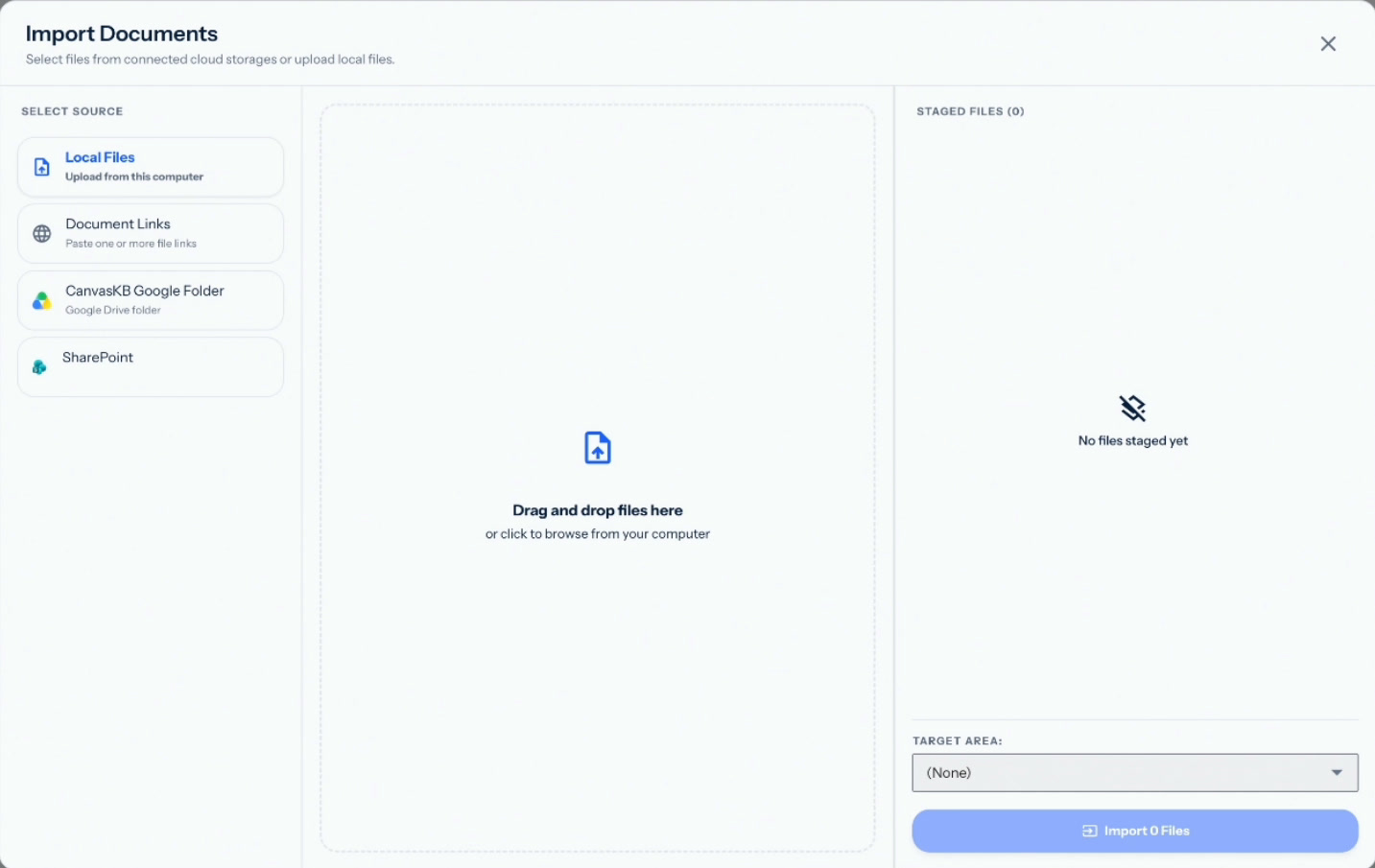
Upload putaway, picking, dock and safety SOPs, link equipment documentation from your OEMs' websites, or connect SharePoint, OneDrive or Google Drive. Connections are read-only, and changes sync in every hour.

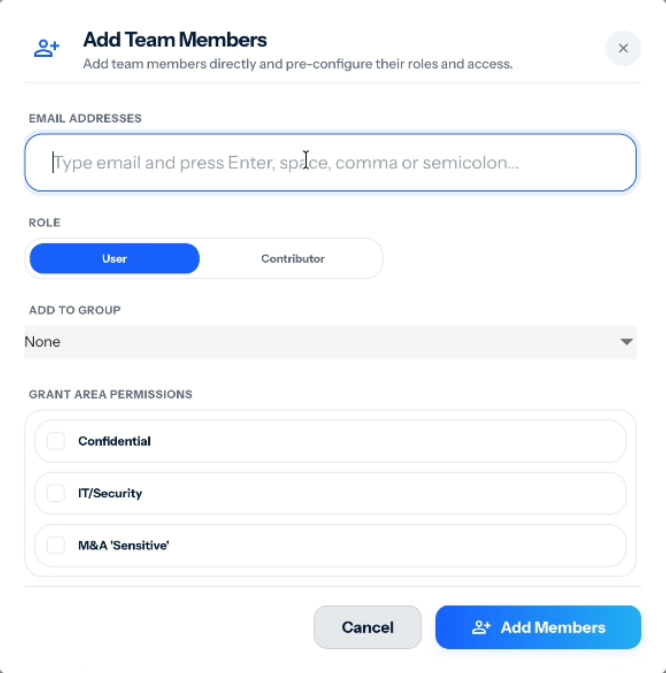
Give each building, shift or team its own knowledge area, group people by role, and every question searches only what that person may see.

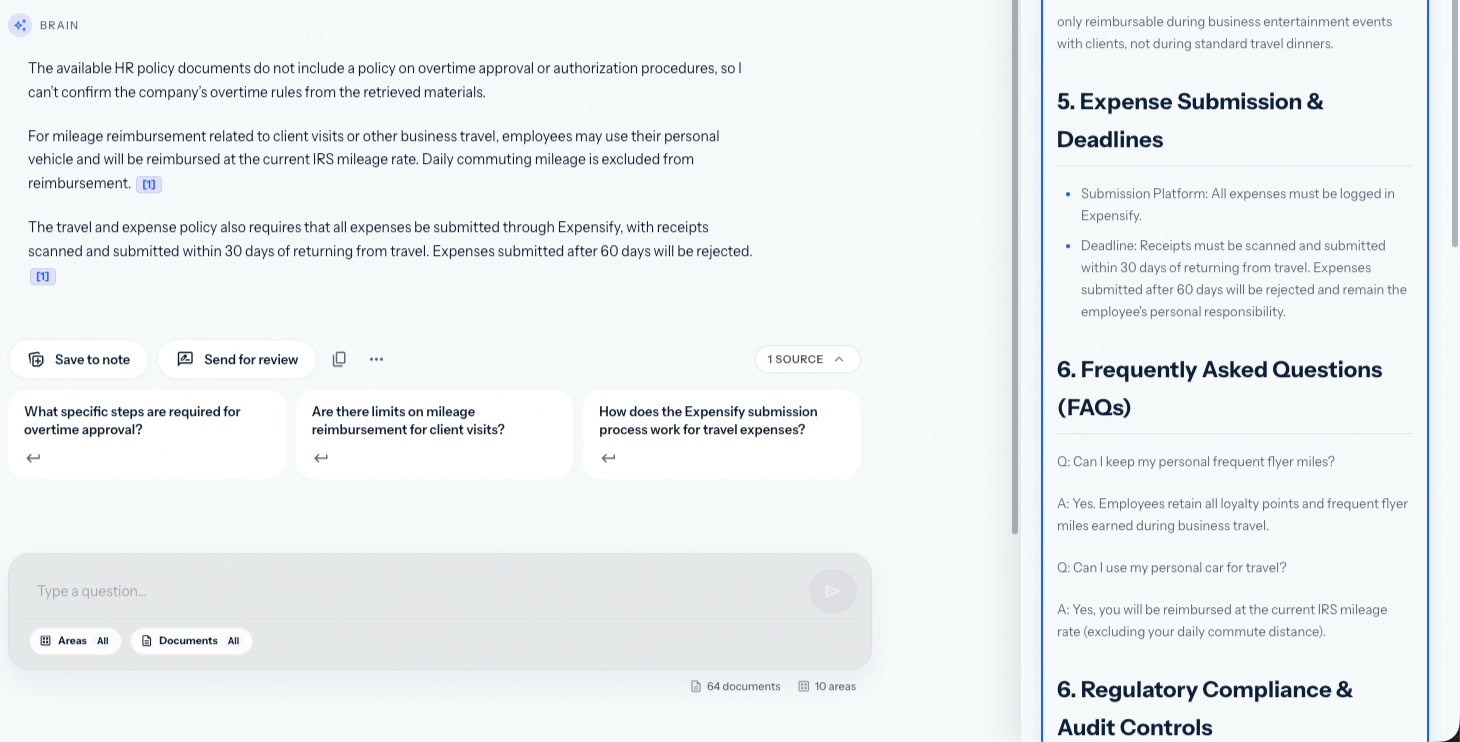
Every answer links to its source. When the documents fall short, CanvasKB says so, anyone can send it for review, and it shows up in your analytics.

Screenshot of the CanvasKB Import Documents window: upload local files, add document links, or connect a Google Drive folder or SharePoint, then choose the target knowledge area.

Real screen: import from your computer, web links, a Google Drive folder or SharePoint, straight into a knowledge area.

Screenshot of the CanvasKB Add Team Members window: enter email addresses, choose the User or Contributor role, add to a group and grant knowledge area permissions.

Real screen: invite people as users or contributors, add them to a group and grant the knowledge areas they can see.

Screenshot of a CanvasKB answer with numbered source markers, Save to note and Send for review buttons, and the cited document open in a citations panel.

Real screen: the answer cites its source, the source opens beside it, and it says so when the documents don't cover a question.

Real screens from a CanvasKB demo workspace. Hover over the steps or select one to pause.

Connecting AI to SharePoint is the easy part.

Someone in IT can point Copilot or Claude at a folder in an afternoon. Running company knowledge for every building and shift is a different job: access by rule, answers you can prove, conflicts and versions handled, and a loop that improves the documents. Rebuilding that yourself is not a walk in the park.

Answers

It says when it doesn't know

Answers come only from your approved documents. If they don't cover a question, CanvasKB says so instead of guessing.

Access

Access by rule, not by folder

Knowledge areas, user groups and three roles decide who sees what. Every question searches only what that person may see.

Citations

A source you can open

Each citation opens the document at the cited page, with the passage highlighted.

Conflicts

Contradictions held back

A document that contradicts another in the same area is marked as a conflict and kept out of answers until someone merges it.

Versions

Always the latest version

Every document keeps its versions. When a cited document has a newer one, people see a warning and a summary of what changed.

Feedback

A loop that fixes the source

Anyone can send an answer for review. The area's owners get the question, an AI briefing on the gap, and a permanent audit trail.

Insight

A pulse for leaders

See what gets asked and when, the questions your documents can't answer, and where access blocks people. Anonymous by design.

Reading

Required reading, with proof

Assign a document with a due date, see who has confirmed reading it, nudge the rest, and export the record.

No one on your team can, or should, build all of this alone with a Copilot or Claude license.

One site. 25 people. $125 a month.

Tier 1 is one flat fee for up to 25 users, so you don't count seats. Most warehouses start with one shift or one zone and add people once it has earned its place.

Every CanvasKB feature: cited answers, management analytics, review requests, knowledge areas and permissions, version history, and required reading with read confirmation

SharePoint, OneDrive and Google Drive sync, web links and document upload

Fully hosted on Microsoft Azure, with nothing to install

Save 10%, 15% or 20% when you prepay for one, two or three years

CanvasKB, Copilot or no tool at all: what 25 people cost and what you get

CanvasKB Tier 1

Microsoft 365 Copilot Business

No tool: people ask each other

Cost for 25 people a month

$125, one flat fee

$525 ($21 a person), plus a Microsoft 365 plan for each person

No license fee, but supervisors keep answering the same questions

Where answers come from

Only the documents you've added and approved

Any file, email or chat each person can open

Whoever is nearby, or whatever a search of shared folders turns up

Can you check the answer?

Yes. Every answer links to the page and paragraph

It links to the files it drew on

Rarely. A colleague's answer has no source

What leaders learn

What people ask, what your documents can't answer, and where access blocks them

Usage counts, not the questions people ask

Nothing, unless someone writes it down

Copilot figures: Microsoft 365 Copilot Business list price of $21 per user per month on an annual plan, for organizations with up to 300 users, checked 30 October 2026. Larger organizations pay $30 per user for Microsoft 365 Copilot. Both need a qualifying Microsoft 365 plan for each person.

Secure by design

Reviewing vendors for IT? Email [email protected] for our full Security FAQ.

Access by rule

Knowledge areas, user groups and roles decide who sees what. Every question searches only the areas that person may see, and changes apply at once.

Anonymous insight

Analytics and review requests show the question, never who asked it.

Never used to train AI

Your documents and questions are not used to train or improve AI models.

Masked before the AI sees it

Names, email addresses and phone numbers in a question are masked before the AI model sees them.

Encrypted

AES-256 at rest, and TLS 1.2 or higher in transit.

Hosted on Microsoft Azure

In the United States, with each organization's documents, users and chats kept separate.

CanvasKB can read the SharePoint, OneDrive or Google Drive files you select. It can't edit, delete or re-share them.

Work sign-in

Microsoft work accounts (Microsoft Entra ID), or business email and password.

Yours to delete

Remove a document or your whole account at any time. If you don't continue after the trial, your data is deleted within 30 days.

What our first pilot users told us

Dr. Vijay Jog, founder of CanvasKB

We're a young company, so there is no wall of logos here yet. But we are proud to share a sample of comments made by our first pilot users below, and you can try CanvasKB on your own documents: judge it by your answers, not our claims.

CanvasKB was founded by Dr. Vijay Jog, founder of the CRG group of companies, with more than 30 years of consulting and entrepreneurial experience. Vijay on LinkedIn

“This is an excellent product, and it brings structure to the chaos. Currently, employees must 'think like librarians' to memorize the structure of these SharePoints, naming conventions, navigations, etc. Your solution will minimize search time, shorten the onboarding period for new hires and improve the employee experience.”

Project manager, IT and systems, at a mid-market beverage manufacturer

“I really like how quickly the AI assistant responds, as well as the consistency in language and tone. The responses are action-oriented, with practical steps, which makes the feedback feel grounded in execution rather than theoretical.”

Head of HR and talent development, at the same manufacturer

“I am very impressed. All of the responses were appropriate and made good sense to me. Recognizing that these responses are all based on a single document, I can imagine how powerful this tool will be when complete company documentation is loaded.”

Independent CEO advisor

From pilot feedback sent to us by email, April 2026. Company names left out.

Questions warehouse managers ask

Still unsure? Email [email protected].

Last updated 3 November 2026

How is CanvasKB different from Microsoft Copilot?

Copilot is a general assistant, priced per person, that works across the files, email and chats each person can open in Microsoft 365. CanvasKB runs company knowledge for the whole team: answers only from the documents you approve, access by knowledge area and group, citations that open the exact passage, a review loop that fixes the source, and analytics that show leaders what people ask and where the documents fall short. For 25 people, CanvasKB is $125 a month in total. Copilot Business lists at $21 per person per month, on top of a Microsoft 365 plan.

Couldn't our IT team build this with Copilot or Claude?

They could connect an AI to a folder quickly. The work is everything after that: deciding who can see what across your document sources, keeping answers to approved documents, holding back contradictions, tracking versions, routing weak answers to the right owner, proving who has read what, and showing leaders what people need without naming anyone. CanvasKB does all of that today, for one flat monthly fee.

What do managers see?

An analytics dashboard: questions, active users and the answer rate over 7 or 30 days, when questions come in, question types with the actual questions behind them, and weak answers grouped into knowledge gaps, access gaps and flagged answers, with the areas missing the most content. It's anonymous by design: you see the questions, not who asked them.

Will it work for temps on their first day?

Yes, if they can open a web browser on a phone, a tablet or a shared terminal. They ask in plain words and get the answer with its source, so they don't need to know where the SOP lives.

Can each building have its own procedures?

Yes. Put each site's SOPs in its own knowledge area, so a worker in one building gets that building's answer.

Which documents can it use?

Putaway and slotting SOPs, picking and packing procedures, dock receiving and shipping, powered industrial truck and safety rules, PPE requirements and HR policies. Upload files, link equipment documentation straight from your OEMs' websites, or connect SharePoint, OneDrive or Google Drive with read-only access.

What if an answer is wrong or missing?

Every answer shows its source, so people can check it before they act. If your documents don't cover a question, CanvasKB says so instead of guessing, and anyone can send the answer for review to the people who look after that document.

How long does it take to set up?

You can start the same day: connect SharePoint or upload your first documents, decide who sees what, and invite your team. A new document can be asked about within seconds of upload. A good first step is the 10 to 20 procedures new starters ask about most.

What happens after the 30-day free trial?

You can keep going on Tier 1 at $125 a month for up to 25 people, or prepay for one, two or three years and save 10, 15 or 20%. If you don't continue, your trial data is deleted within 30 days.

Is our data used to train AI?

No. Your documents and questions are never used to train AI models. CanvasKB runs on Microsoft Azure in the United States, and connections to SharePoint, OneDrive or Google Drive are read-only.

Try it before your next peak

Day 1

Upload the 10 procedures new starters ask about most.

Day 2

Invite your supervisors and shift leads.

Weeks 1 to 4

Ask the questions you hear every shift, send weak answers for review, and see in the analytics what to fix.

Day 30

Decide whether it's worth $125 a month.

After the demo, try it free for 30 days on Tier 1, up to 25 people. Questions first? [email protected]

Illustration of three workers in hard hats and hi-vis vests, each holding a glowing blue sphere.
top